

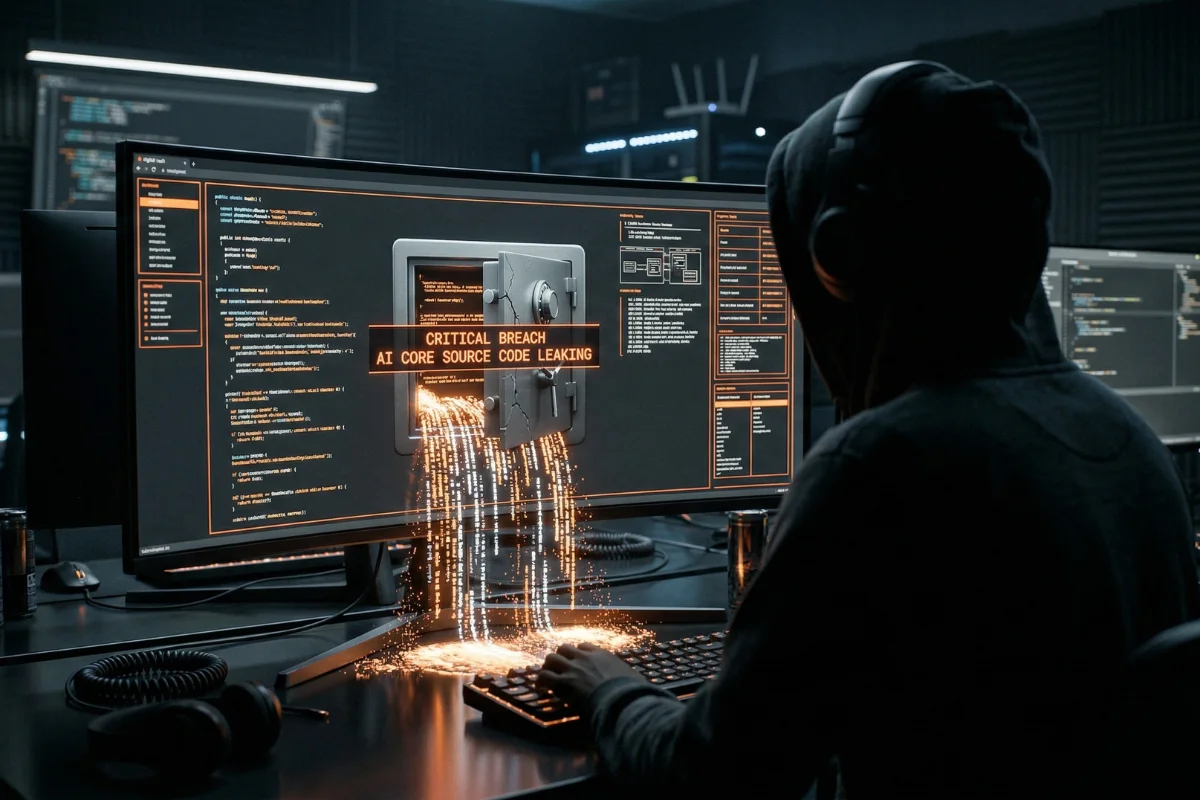
The AI engineering world is currently reeling from an unprecedented operational blunder. The Claude Code leak Anthropic inadvertently triggered this week has exposed the company’s most closely guarded architectural secrets. For US developers, this source code exposure reveals exactly how the world’s smartest coding agent operates behind the scenes.
An accidental npm package deployment bypassed standard obfuscation protocols. This dumped the raw, unminified TypeScript codebase directly onto the public internet. Developers immediately began archiving the repository, uncovering unreleased tools that blur the line between basic assistants and autonomous systems.
In this breakdown, we will explore the hidden features discovered inside the leaked repository. You will learn about the highly anticipated “Self-Healing Memory” architecture and the mysterious “Kairos” daemon. We will also break down how these architectural choices impact your daily workflow and why competitors are rushing to take notes.
The Anatomy of the Claude Code leak Anthropic Suffered
Anthropic built its reputation on extreme safety and airtight security protocols. However, human error cares very little for corporate branding. The leak originated from a simple misconfiguration in their CI/CD pipeline during a routine update to the Claude Code CLI.
Instead of shipping the compiled and minified binaries, the build script packaged the entire internal source directory. This included internal developer comments, roadmap feature flags, and experimental daemon architectures. By the time Anthropic engineers realized the mistake and yanked the package, thousands of US developers had already cloned the repository locally.
[Industry Insider Note: Once code hits npm, it is immortalized. Mirrors and automated scrapers duplicate packages instantly, making damage control virtually impossible across the web.]
This incident provides a rare, unfiltered look into the cognitive architecture of a frontier AI model. Fans of the platform are treating the codebase like a masterclass in building modern artificial intelligence tools. The internal documentation reveals a massive shift from reactive text-generation to proactive problem-solving.
How “Self-Healing Memory” Upgrades Your Workflow
Analyzing the code reveals a massive leap in how AI handles context over long periods. Current coding assistants operate purely on a prompt-and-response basis. You ask a question, and the AI answers based on immediate, limited context.
The leaked code details a profound shift toward true agentic autonomy, mirroring the broader AI agents trend in the United States. Developers found sophisticated internal triggers that allow Claude to operate independently without constant human supervision.
One of the most fascinating discoveries is a system referred to internally as “Self-Healing Memory”. Traditional AI agents suffer from extreme context degradation, frequently forgetting older files or previous instructions during long, multi-hour coding sessions.
The leaked source code reveals that Claude Code actively monitors its own context window limits. When it detects conflicting information or forgotten variables, it triggers a background process to re-index the project seamlessly.
Actionable Steps to Emulate Self-Healing Context
If you want to mimic this behavior in your current projects today, you need to structure your local environment effectively.
- ✅ Dynamic pruning: Organize your workspace to discard irrelevant tokens automatically before prompting the AI.
- ✅ Context stitching: Use scripts to proactively fetch required files before feeding them into your assistant.
- ❌ Avoid manual resets: Stop starting a “new chat” when the AI gets confused. Rely on better AI tools for developers to maintain session continuity.
This self-correcting loop ensures the agent remains highly accurate even during massive, multi-day refactoring sessions. It is a brilliant, practical solution to the biggest bottleneck in current AI development workflows.
Kairos: The Controversial Always-On AI Daemon
Perhaps the most controversial discovery in the Claude Code leak Anthropic experienced is “Kairos”. The source code describes Kairos as an always-on AI daemon that runs persistently in the background of your local machine.
Instead of waiting for a manual command or hotkey, Kairos actively watches file system changes and terminal errors. If a developer saves a file with a syntax error, Kairos suggests a fix before the compiler even has time to crash completely.
While incredibly powerful, Kairos raises immediate privacy concerns. An AI daemon constantly scanning local files requires massive trust, far beyond what recent Claude model releases demand. Enterprises will likely push back hard against any tool that reads sensitive files without explicit permission.
Preparing for Persistent Background Agents
To prepare for proactive tools like Kairos, developers must rethink their local security hygiene immediately.
- ⏱️ Zero-latency monitoring: Sandbox your development environments to prevent overreach by background daemons.
- 💰 Compute heavy processes: Monitor your API usage closely, as always-on agents consume massive resources and credits rapidly.
- 📊 Deep system integration: Ensure sensitive files (like
.envor config files) are strictly excluded from all AI watch-lists.
Hidden Features: Tamagotchis and Undercover Mode
Beyond the heavy engineering and autonomous systems, the codebase contains some surprisingly playful and subversive features. Developers found code for a Tamagotchi-style “pet” that lives directly in the terminal.
This digital companion apparently reacts to your coding streaks and build successes. It adds a layer of gamification to the otherwise sterile CLI experience, proving Anthropic wants to build tools developers actually enjoy using.
Additionally, the leak exposed an “Undercover Mode”. This feature appears designed to bypass restrictive corporate firewalls or aggressive security software that might block standard AI agent telemetry. It highlights how Anthropic engineers are actively designing workarounds for frustrating enterprise deployment hurdles.
Comparing Architectures: Traditional vs. Leaked Tech
To understand the full magnitude of this leak, we must compare the standard industry approach with the advanced systems exposed in the repository.
| Feature Area | Traditional AI Assistants 🤖 | Leaked Claude Code Architecture 🚀 | Impact on US Devs 🇺🇸 |
|---|---|---|---|
| Memory Management | Static context windows. Forgets older files. | Self-Healing Memory: Proactively repairs context gaps. | Reduces frustration during deep code refactoring. |
| Execution Trigger | Manual. Requires direct prompt or hotkey. | Kairos Daemon: Always-on. Reacts to errors automatically. | Saves hours of time on debugging and log reading. |
| Agent Behavior | Single-task execution. | Supports complex agentic swarms for parallel work. | Accelerates multi-file project generation significantly. |
| Engagement | Sterile text interfaces. | Tamagotchi pet: Gamified terminal presence. | Boosts morale and platform stickiness. |
The Industry Fallout: OpenAI and Open-Source
The Claude Code leak Anthropic is currently trying to contain is a massive gift to the open-source community. While copyright protects the literal source code, the architectural concepts and structural paradigms are now public domain knowledge.
Competitors are absolutely paying attention. OpenAI, Google, and open-source contributors now have a clear blueprint of Anthropic’s state-of-the-art architecture. This will inevitably accelerate the commoditization of advanced, agentic features across the entire software ecosystem.
For everyday developers, this leak proves the company is building robust, developer-first tools that solve real pain points. If you want to stay ahead of the curve, you might even consider trying to build your own AI agent using the exposed principles before the official launch.
Conclusion
The accidental exposure of Claude Code’s internal architecture is a defining moment for AI development in 2026. While Anthropic faces a massive PR and security headache, the developer community gets a masterclass in advanced agent design.
Features like Self-Healing Memory and the Kairos daemon represent the absolute next frontier of human-computer collaboration. Do not wait for these tools to hit the mainstream. Start adapting your workflows today to integrate more autonomous agent behaviors, because the era of the passive coding assistant is over.
[Editorial Note: Ensure your local repositories are properly secured. You do not want to be the next developer accidentally leaking private codebase details.]






![How to Humanize AI Text 2026: Bypass Detectors Fast [Guide]](https://techonplay.com/wp-content/uploads/2026/03/imagem-6.webp)
![Kids App Addiction: How to Protect Your Family [2026 Guide]](https://techonplay.com/wp-content/uploads/2026/03/imagem-5.webp)