The unprecedented Sam Altman home attack has officially put Silicon Valley on high alert [the physical stakes of the AI boom have never been clearer]. As generative artificial intelligence tools aggressively reshape the American economy, public fascination has morphed into dangerous, targeted violence against top US executives.
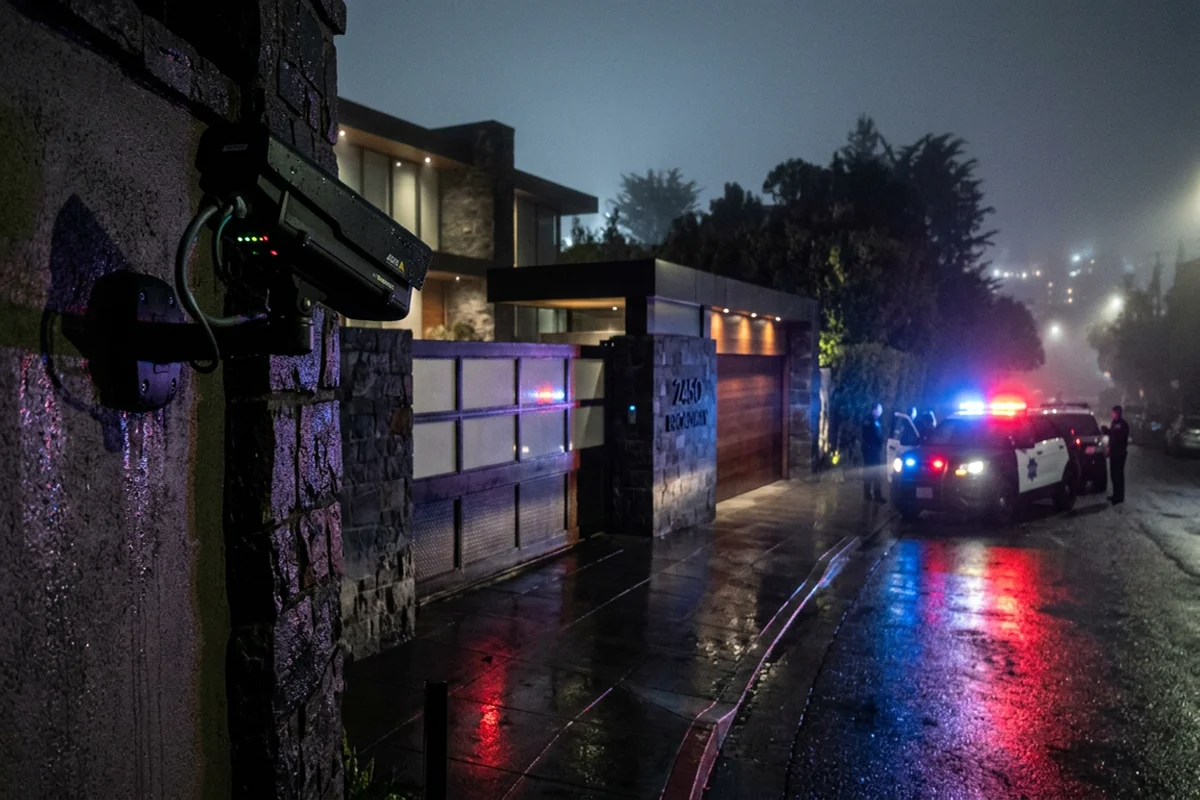
Within a terrifying 48-hour window, the OpenAI CEO endured two consecutive assaults at his Russian Hill residence in San Francisco. First, an assailant hurled a Molotov cocktail at his property, followed just days later by a drive-by shooting. These incidents expose a massive vulnerability in how tech enterprises protect their most visible innovators.
In this breakdown, we analyze the exact timeline of these San Francisco attacks, the suspects involved, and the mandatory security upgrades US tech leaders must deploy to survive this new era of ideological hostility.
Unpacking the San Francisco Attack Timeline
Friday: The Firebombing and HQ Threats
The chaos began early Friday morning, April 10, when a 20-year-old suspect named Daniel Alejandro Moreno-Gama targeted Altman’s $27 million estate. Just before 4:00 a.m., the attacker hurled a Molotov cocktail directly at the property’s exterior metal gate, sparking a fire that on-site security quickly extinguished. The suspect immediately fled the scene on foot.
However, the aggression rapidly escalated. Approximately one hour later, Moreno-Gama appeared outside OpenAI’s corporate headquarters in the Mission Bay neighborhood. He openly threatened to burn down the entire building before the San Francisco Police Department (SFPD) swiftly intercepted and arrested him.
OpenAI representatives praised the SFPD’s rapid response, confirming that no employees or executives were harmed during the terrifying ordeal.
Sunday: The Drive-By Shooting
Before the tech community could fully process the firebombing, a second attack struck the exact same Russian Hill location. At roughly 1:40 a.m. on Sunday, April 12, an apparent drive-by shooting occurred right outside Altman’s residence.
A security camera captured the license plate of a Honda sedan slowly passing the home, giving SFPD investigators a crucial lead. Police quickly tracked the vehicle and arrested 25-year-old Amanda Tom and 23-year-old Muhamad Tarik Hussein without a struggle. Authorities subsequently searched their property and seized three firearms.
Both suspects were booked into the San Francisco County Jail and formally charged with the negligent discharge of a firearm. Investigators are still working to confirm if Altman was the intentional target of the gunfire or if the shooting was recklessly random.
Analyzing the Consecutive Security Breaches
To understand the severity of this escalation, we must compare the operational details of both San Francisco security events.
Why US Tech Leaders Are Now Targets
The dual assaults on Altman’s home highlight a disturbing trend: AI founders are the new lightning rods for societal anxiety.
The Face of the Disruption
Altman is the undeniable face of the American generative AI revolution. As OpenAI releases new ChatGPT updates that threaten traditional employment sectors, abstract online anger transforms into kinetic, real-world retaliation. Even as competitors push the market forward—fueling intense DeepSeek vs ChatGPT rivalries—Altman remains the primary focal point for public backlash.
Radicalization Against Big Tech
Protest groups and radicalized individuals increasingly view agentic AI and autonomous systems as existential threats. When debates over Big Tech regulation policies fail to slow progress, bad actors bypass digital protests and directly attack the physical infrastructure and human capital driving the technology forward.
Upgrading Executive Protection in Silicon Valley
Standard residential alarms are no longer sufficient for high-profile tech founders. These attacks mandate a complete overhaul of corporate defense strategies across the US tech sector.
- ✅ Deploy Layered Defenses: Install military-grade thermal cameras and reinforced perimeter gates that withstand low-tech incendiary devices.
- ✅ Hire Tactical Details: Maintain 24/7 armed executive protection teams at all primary and secondary executive residences.
- ❌ Don’t Rely Solely on Local PD: Establish private rapid-response protocols; every second matters during an active threat.
- 📊 Monitor Threat Vectors: Utilize cyber intelligence teams to scrape fringe forums and track anti-AI sentiment before it materializes physically.
Final Thoughts on the AI Security Crisis
The back-to-back attacks on Sam Altman’s home permanently alter the risk landscape for American technology innovators [the era of the highly accessible tech CEO is over]. Companies driving the AI revolution must pivot immediately from reactive responses to proactive, militarized security postures.
Audit your organization’s executive risk profile today. As software becomes exponentially more powerful, the physical defenses protecting its creators must become entirely impenetrable
Sources:
- The New York Times: Molotov Cocktail Is Hurled at Home of Sam Altman, OpenAI’s CEO
- The Verge: Sam Altman reportedly targeted in second attack
- KHOU 11: 2 arrested after apparent shooting near OpenAI CEO Sam Altman’s home
- BBC News: OpenAI boss Sam Altman’s home targeted with Molotov cocktail
Further Reading
- The AI Jobs Impact 2026: Why Tech Firms Are Actually Hiring More

- Musk vs Altman OpenAI 2026: The Leaked Emails War

- Diablo 4 Lord of Hatred Release Time: Global Launch Schedule, Patch Size, and Pre-load Specs

- Apple AI glasses designs: Will U.S. Buyers Fight For Them?

- The 2026 US AI Job Market: Top Roles, Salaries, and Hiring Trends