
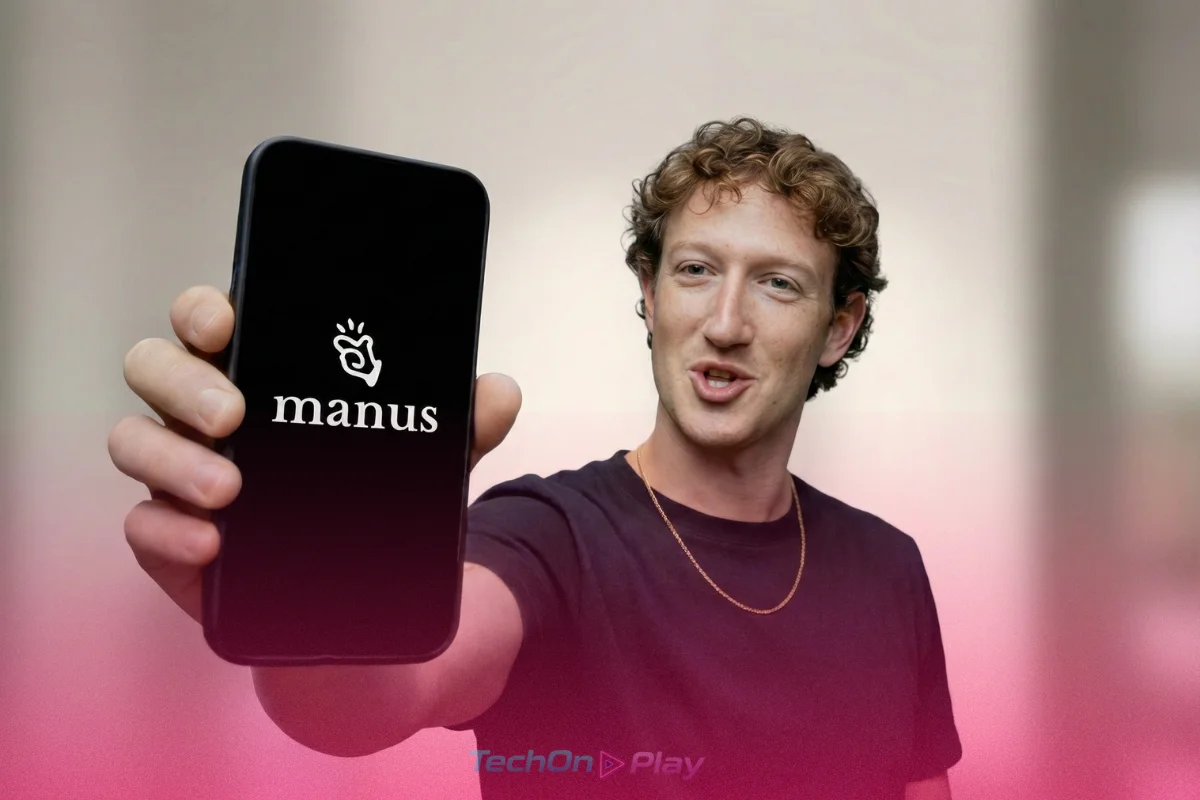
The $2B Meta Manus acquisition signals a major shift in the 2026 AI wars. Discover why Zuckerberg’s bet on autonomous agents directly challenges OpenAI.
Mark Zuckerberg’s latest power play, the Meta Manus acquisition, isn’t just another talent hire—it is a declaration of war on the agentic AI front. By dropping over $2 billion to acquire the Singapore-based startup Manus, Meta has effectively signaled that 2026 will not be about who has the best chatbot, but who owns the most capable autonomous agent.
While the industry was distracted by LLM parameter counts, Manus quietly built a “Generalist Agent” capable of executing complex, open-ended tasks that baffled traditional models. For developers and AI enthusiasts, this deal proves that the era of passive AI assistants is over.
The Pivot to “Action” Models
The core value of Manus lies in its ability to do things, not just say things. Unlike standard GPT wrappers, Manus’s technology was designed to navigate the web, manage detailed workflows, and execute multi-step objectives with minimal human oversight.
According to the official announcement on the Manus Blog, the startup will continue to operate its standalone service while its team joins Meta to “deliver general-purpose agents across consumer and business products”. This technology bridges the gap between Llama’s reasoning capabilities and real-world application, potentially transforming Meta AI from a conversationalist into a fully functional digital employee.
What the Meta Manus Acquisition Means for the AI Wars
This move is a direct strike against OpenAI’s “Operator” and Google’s “Project Jarvis.” Until now, Meta’s open-source Llama strategy lacked a proprietary, consumer-facing “agentic” edge.
The Meta Manus acquisition changes the calculus in three ways:
- Closed vs. Open Strategy: It remains to be seen if Meta will open-source Manus’s agentic architecture or keep it as a moat for its consumer products like WhatsApp and Ray-Ban smart glasses.
- Talent Consolidation: Acquiring a team that processed over 147 trillion tokens and built 80 million virtual computers injects critical DNA into Meta’s FAIR (Fundamental AI Research) division.
- Ecosystem Integration: Imagine an Instagram ad manager that runs itself, or a WhatsApp bot that books flights autonomously. Manus makes this feasible in the near term.
The “DeepSeek” Factor
Manus garnered attention in late 2025, with some analysts comparing its rapid rise and efficiency to China’s DeepSeek. By snapping up this asset before it could scale independently or be courted by rivals, Meta has removed a dangerous wildcard from the board. This defensive acquisition ensures that the “next big thing” in agentic workflows now lives inside Menlo Park.
Conclusion
The Meta Manus acquisition is the defining opening move of 2026. For investors, it justifies the massive Capex spend; for builders, it raises the bar. If you are building AI agents, the ceiling just got higher—and the competition just got significantly more well-funded.
Sources
- Manus Official Blog: “Manus Joins Meta for Next Era of Innovation” – manus.im
- Wall Street Journal: “Meta Buys AI Startup Manus for More Than $2 Billion” – wsj.com
- CNBC: “Meta acquires intelligent agent firm Manus, capping year of AI deals” – cnbc.com
- Bloomberg: “Meta to Buy Manus, an AI Startup With Chinese Roots” – bloomberg.com
📚 Further Reading
- The AI Jobs Impact 2026: Why Tech Firms Are Actually Hiring More

- Musk vs Altman OpenAI 2026: The Leaked Emails War

- Diablo 4 Lord of Hatred Release Time: Global Launch Schedule, Patch Size, and Pre-load Specs

- Apple AI glasses designs: Will U.S. Buyers Fight For Them?

- The 2026 US AI Job Market: Top Roles, Salaries, and Hiring Trends