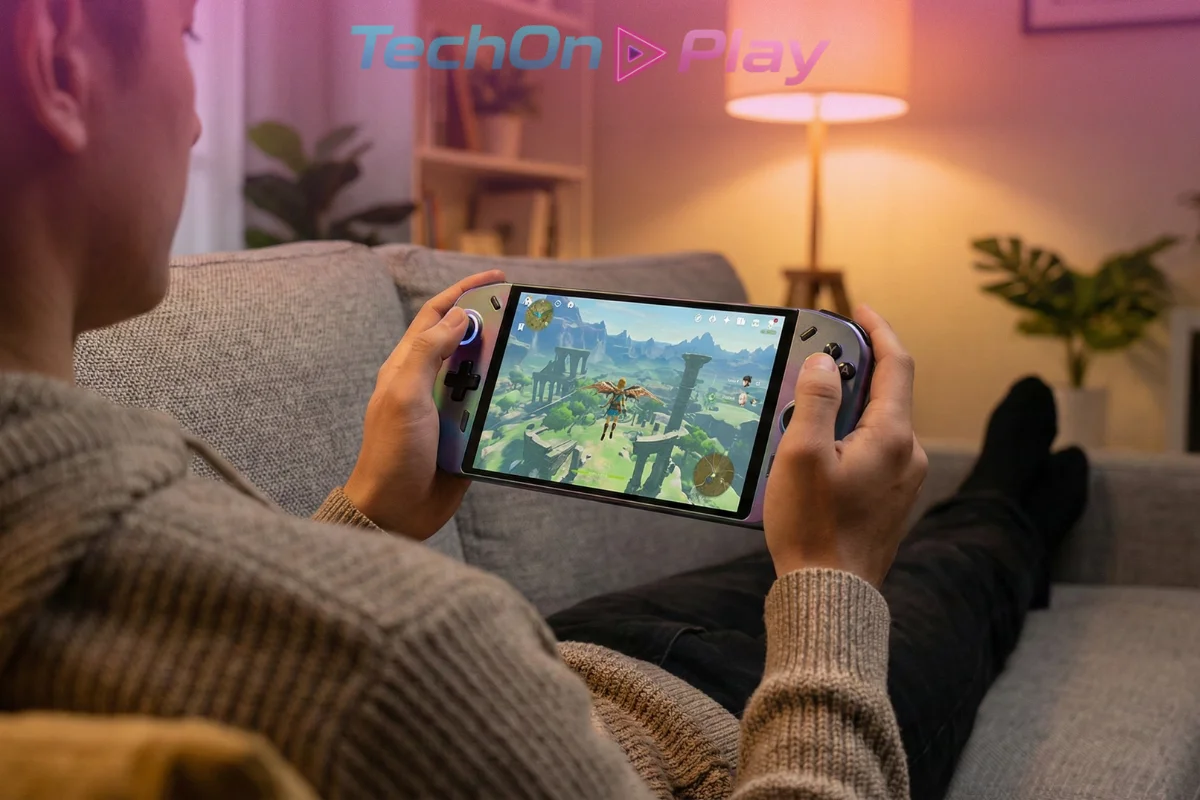
Windows is losing its grip on the portable market as manufacturers pivot to Valve’s ecosystem, defining the new generation of SteamOS handhelds 2026. At CES 2026, the industry witnessed a tectonic shift: Lenovo officially launched the Legion Go S with SteamOS preinstalled, marking the first time a major OEM ships a flagship handheld without Windows as the default operating system. This isn’t a niche experiment—it’s a strategic bet that signals exactly where portable gaming is headed.
The Windows Problem Nobody Talks About
Windows 11 wasn’t designed for handheld gaming, and the cracks are showing. Out-of-the-box, users face OneDrive setup screens, Microsoft Office promotions, and multi-gigabyte updates before they can launch a single game. Background processes consume 15-20% of system resources, directly impacting frame rates and battery life on hardware with tight thermal budgets.
Sleep/wake reliability remains a critical failure point in 2026. Windows handhelds frequently wake to frozen controls, missing audio, or system crashes—issues virtually nonexistent on SteamOS. Battery drain during sleep mode continues to plague Windows devices, with the OS running at full TDP even when the screen appears off.
Rise of SteamOS Handhelds 2026
Valve’s Linux-based operating system provides tangible advantages that Windows can’t match, which is why SteamOS handhelds 2026 are dominating the conversation. Built on a lightweight foundation, SteamOS eliminates unnecessary background tasks and dedicates system resources strictly to gaming. Benchmark comparisons show 2-10 fps improvements on identical hardware when running SteamOS versus Windows 11.
Technical benefits include:
- Pre-cached shader compilation eliminates stutter during gameplay.
- Superior thermal management keeps devices cooler under sustained loads.
- Instant suspend/resume allows true console-like pause functionality.
- Battery life extends 15-25% compared to Windows on equivalent workloads.
Major OEMs Make the Switch
Lenovo leads the charge with the Legion Go S, available in both SteamOS and Windows variants. The SteamOS model ships with AMD’s Ryzen Z1 Extreme processor, an 8-inch 120Hz display, and starts at $499.99—$230 less than the Windows version launching in January 2026. Lenovo positions SteamOS as the premium gaming experience, not a budget alternative.
Valve confirmed Lenovo as its first official SteamOS partner, though additional manufacturers are expected to follow. The SteamOS 3.7.8 update already supports the ASUS ROG Ally, ROG Ally X, and original Legion Go, with users reporting flawless performance after switching from Windows.
What This Means for 2026 Buyers
If your game library lives on Steam, SteamOS handhelds deliver objectively better experiences. Performance consistency, battery life, and user interface design all favor Valve’s platform. Windows maintains one critical advantage: compatibility with anti-cheat systems used by Fortnite, Call of Duty Warzone, and Valorant.
The buying decision matrix is straightforward. Choose Windows if you need Game Pass, Epic Games Store, or competitive multiplayer titles with kernel-level anti-cheat. Choose SteamOS if you prioritize performance, battery life, and a frictionless Steam library experience. The industry momentum toward SteamOS suggests Microsoft faces serious competitive threats in portable gaming unless Windows 12 addresses handheld-specific optimization.
Sources & References
- GamingOnLinux: Lenovo Legion Go S with Valve’s SteamOS is Official
- Windows Central: Valve Preparing for Legion Go S SteamOS Launch
- XDA Developers: 6 Reasons SteamOS is Better than Windows on Handhelds
- NotebookCheck: Valve Releases Major SteamOS Update with ROG Ally Support
- Tom’s Guide: 2026 Handheld Gaming Expectations & Analysis
Further Reading
- The AI Jobs Impact 2026: Why Tech Firms Are Actually Hiring More

- Musk vs Altman OpenAI 2026: The Leaked Emails War

- Diablo 4 Lord of Hatred Release Time: Global Launch Schedule, Patch Size, and Pre-load Specs

- Apple AI glasses designs: Will U.S. Buyers Fight For Them?

- The 2026 US AI Job Market: Top Roles, Salaries, and Hiring Trends