
Reviews
Best AI Image Generators 2026: 7 Tools Leading Right Now [Sept Update]
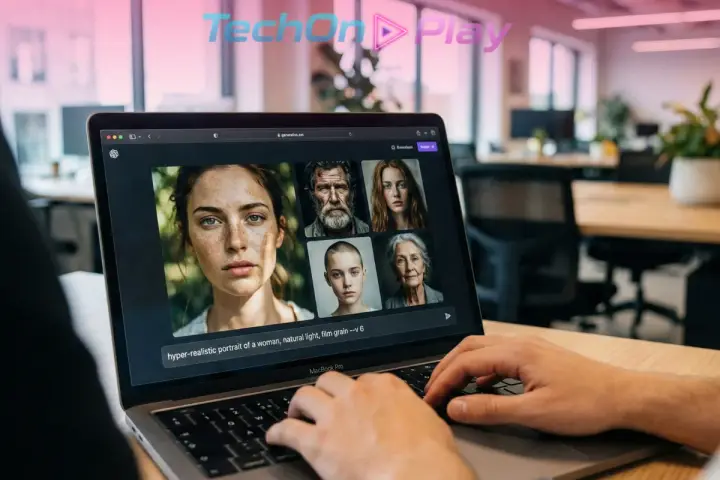
OpenAI shipped ChatGPT Images 2.5 on September 8, and its two API models now hold the top two spots on the Artificial Analysis text-to-image leaderboard. If you are choosing from the best AI image generators 2026 has produced, any ranking published before summer is already stale.
The field moved fast. Meta launched Muse Image on July 7. Midjourney made V8.2 its default on July 24. Grok Imagine Image 2.0 arrived August 7, and Microsoft followed with MAI-Image-2.6 on August 10. Meanwhile, Flux 1.1 Pro and DALL-E 3, which anchored most 2025 lists, no longer sit anywhere near the frontier.
This guide ranks seven generators on output quality, editing control, price, and how easy they are to try today. You get the current version of each tool, what it costs, and who should skip it. Versions and prices reflect what vendors and trackers published as of September 19, 2026.
What Changed in AI Image Generation Since January
Five launches reshaped the rankings between June and September:
📅 June 3: Ideogram 4.0 ships with open weights, and Reve 2 launches with layout-first editing 📅 July 7: Meta debuts Muse Image, its first image model 📅 July 24: Midjourney V8.2 becomes the default version 📅 August 7 and 10: Grok Imagine Image 2.0 and Microsoft’s MAI-Image-2.6 arrive 📅 September 8: ChatGPT Images 2.5 rolls out to every ChatGPT tier
The Artificial Analysis text-to-image leaderboard shows the shift. GPT Image 2.5 Flare leads at 1188 Elo, followed by Sunburst at 1182, GPT Image 2 at 1171, and Grok Imagine Image 2.0 at 1154. Midjourney does not appear in the top 12, so judge it on style, not score.
📊 Treat those scores as a guide, not a verdict. They measure blind preference across many prompts, not your specific workflow.
1. ChatGPT Images 2.5: The Best All-Rounder Right Now
ChatGPT Images 2.5 set the pace the day it launched. OpenAI cut generation latency by up to 50% compared with Images 2.0, sharpened lighting and texture, and made edits more precise, so the parts you did not ask to change stay put.
Two additions matter for daily use. A new Sketch tool lets you draw a rough layout and have ChatGPT build on it, and templates cover formats like posters and merchandise. Developers get two API models: GPT-Image-2.5 Flare as the default and Sunburst for slower, more detailed work.
✅ Holds the top two leaderboard spots (Flare 1188, Sunburst 1182) ✅ Strong multi-turn editing and multilingual text inside images ❌ The Free plan allows only a few images per day ❌ Top-quality API output costs about $0.21 per image 💰 Free tier, Go at $8/month (may show ads), Plus at $20/month, Pro at $100 or $200/month
Related: our guide to ChatGPT image prompts and visual commands shows how to get more from it.
2. Nano Banana 2: Google’s Fast, Consistent Pick
Nano Banana 2, officially Gemini 3.1 Flash Image, has been Google’s image workhorse since February 26. It renders from 512px up to 4K, keeps up to five characters and 14 objects consistent across a scene, and pulls real-world context from web search to label things correctly.
You can use it free in the Gemini app, in Google Search’s AI Mode and Lens, and as the default model in Google Flow at zero credits. Pro and Ultra subscribers can still switch to Nano Banana Pro from the regeneration menu. On June 30, Google added Nano Banana 2 Lite, which generates images in as little as four seconds.
✅ Free access inside Gemini, no separate app ✅ Character and object consistency across a scene ✅ Output from 512px to 4K ❌ Ranks seventh on the Artificial Analysis list (1122 Elo), behind newer models ❌ Closed model with no local option 💰 Free in Gemini, with higher limits on Google AI Plus ($4.99/month) or AI Pro ($19.99/month)
3. Grok Imagine Image 2.0: The Editing Toolkit Challenger
Grok Imagine Image 2.0, released August 7, goes after Photoshop-style tasks instead of only prompts. A magic wand and segmentation tool select regions for targeted edits. Background removal exports transparent files, and multi-reference editing accepts up to five input images.
Smart resize reflows a design across aspect ratios, and templates cover product shots, headshots, icons, and game assets. Grok’s maker said at launch that the model ranked second in both text-to-image and editing on the Arena leaderboards. Artificial Analysis now places it fourth for text-to-image, behind three OpenAI models.
✅ Selection, background removal, and resize tools built in ✅ Inexpensive API at about $0.06 per image ❌ Trails OpenAI’s newest models on the leaderboard ❌ The launch post does not list app pricing 💰 Available as Quality Mode on grok.com/imagine, in the iOS and Android apps, and through the API
Related: our Grok Imagine 2.0 prompts guide covers what to type.
4. Midjourney V8.2: Still the Best Eye for Style
Midjourney made V8.2 its default on July 24, and it doubles down on what the tool does best: aesthetics. Images come out more creative, bold, and edgy, and Personalization got an upgrade. A new Edit Model replaces the older reference tools.
Speed and detail come from V8.1. It renders standard jobs about four to five times faster than earlier versions and produces 2K HD images without upscaling. HD costs 1.3 GPU minutes versus 0.8 for standard. Style Reference codes and Raw mode give you tighter control over the look.
✅ Distinct, cinematic house style ✅ 2K HD output without upscaling ❌ Missing from the Artificial Analysis top 12 ❌ Midjourney’s version notes do not highlight text rendering, so use ChatGPT or Ideogram for copy-heavy posters 💰 Basic $10, Standard $30, Pro $60, Mega $120 per month, with 20% off annual billing
5. Reve 2.1: Layout Control in Native 4K
Reve 2.1, released July 9, is a browser-based workspace built around layout. You place elements where you want them, and the model follows the plan. It outputs native 4K at 16 megapixels and edits at the object level: move, resize, recolor, swap, or remove one element without regenerating the whole image.
It ranks sixth on the Artificial Analysis list at 1129 Elo. One catch: Reve shut down its API on August 14, so this is an app-only choice now.
✅ Object-level edits and spatial layout planning ✅ Native 4K with improved multilingual text ❌ No API since August 14 ❌ Free-tier content may be used to train the model 💰 Free, Lite at $7.99/month, Pro at $19.99/month (paid plans can opt out of training)
6. Ideogram 4.0: Readable Text You Can Run Yourself
Ideogram 4.0 launched June 3 with open weights. Checkpoints sit on Hugging Face in fp8 and nf4 formats, and the nf4 version fits on a single 24GB GPU. Text placement runs through structured JSON prompts, and the model scored 0.97 on X-Omni English OCR accuracy, the highest among open-weight models of its size, according to its release details.
At launch it placed eighth overall and first among open models on Arena. If you prefer not to self-host, the API charges $0.03 (Turbo), $0.06 (Default), or $0.10 (Quality) per image.
✅ Open weights you can run locally ✅ Top text accuracy among open-weight models ❌ Commercial license required for deployment at scale ❌ Missing from the Artificial Analysis top 12 💰 API from $0.03 to $0.10 per image
7. Meta Muse Image: The Free Option Already in Your Feed
Muse Image, launched July 7, is the first image model from Meta Superintelligence Labs. It powers generation in Meta AI and 30-plus effects in Instagram Stories, and it is rolling out to WhatsApp in limited countries. Meta says it reasons through complex prompts, renders text for infographics, and lets you edit with sketches and annotations.
It ranks eighth on the Artificial Analysis list at 1111 Elo, so it trails paid rivals on raw quality. Privacy-minded users should note that Meta pulled a feature that let people @-mention public Instagram accounts after user feedback.
✅ Free for everyday use ✅ Sketch and annotation editing ❌ Higher limits require a subscription ❌ WhatsApp rollout limited to select countries 💰 Free, with paid plans that raise usage limits
Best AI Image Generators 2026: Side-by-Side Comparison
Here is how the seven tools compare on version, release date, price, and best use.
| 🏆 Tool | 📅 Released | 🎯 Best For | 📊 Leaderboard Elo | 🆓 Free Access | 💰 Paid Pricing |
|---|---|---|---|---|---|
| ChatGPT Images 2.5GPT-Image-2.5 Flare / Sunburst | |||||
| Best Overall | Sep 8, 2026 | All-round quality, precise edits, text in images | 1188 (Flare) | ||
| 1182 (Sunburst) | A few images per day on Free | Go $8, Plus $20, Pro $100 or $200 per month | |||
| Nano Banana 2Gemini 3.1 Flash Image | |||||
| Best Free Start | Feb 26, 2026 | ||||
| (Lite: Jun 30) | Character consistency, 512px to 4K output, speed | 1122 | Free in the Gemini app and Google Flow | AI Plus $4.99, AI Pro $19.99 per month | |
| Grok Imagine Image 2.0Quality Mode | |||||
| Best Editing Tools | Aug 7, 2026 | Selective edits, background removal, multi-reference (up to 5 images) | 1154 | Not listed in launch post | API about $0.06 per image |
| Midjourney V8.2Default version | |||||
| Best Style | Jul 24, 2026 | Artistic, cinematic looks, 2K HD without upscaling | Not in top 12 | No free plan listed | $10, $30, $60, $120 per month |
| Reve 2.1Native 4K, layout-first | |||||
| Best Layout Control | Jul 9, 2026 | Object-level edits, spatial layout planning | 1129 | Free daily energy (content may train the model) | Lite $7.99, Pro $19.99 per month (API discontinued Aug 14) |
| Ideogram 4.0Open weights | |||||
| Best Open Model | Jun 3, 2026 | Text-heavy designs, self-hosting (nf4 fits a 24GB GPU) | Not in top 12 | Download weights from Hugging Face | API $0.03, $0.06 or $0.10 per image |
| Meta Muse ImageMeta AI, Instagram, WhatsApp | |||||
| Free Pick | Jul 7, 2026 | Free everyday creation, sketch and annotation edits | 1111 | Free for everyday use | Subscriptions for higher limits (prices not listed) |
Data as of September 19, 2026. Elo figures come from the Artificial Analysis text-to-image leaderboard (September 2026) and measure blind human preference. Midjourney and Ideogram 4.0 do not appear in its top 12. Prices and plan limits change often, so check each vendor before subscribing.
Two Models to Watch: MAI-Image-2.6 and FLUX 3
Microsoft says MAI-Image-2.6 (August 10) launched at No. 2 on the Arena text-to-image board, with a 91 Elo gain in text rendering over MAI-Image-2.5. Artificial Analysis lists it fifth at 1147 Elo and roughly $0.04 per image. It sits in public preview on Microsoft Foundry, so most readers cannot use it yet.
Black Forest Labs unveiled FLUX 3 on July 23 as one model for image, video, and audio. The video and action versions entered early access first. FLUX 3 Image was slated for the following weeks and still shows as coming soon on Krea. Open-weight versions are promised later in 2026. Until then, FLUX.2 is the version you can use today.
Related: FLUX 3 leans toward video, so see our roundup of the best AI video generators of 2026.
Which AI Image Generator Should You Pick?
The best AI image generators 2026 offers each win a different job, so match the tool to the task: Need video, voice or music too? Our roundup of artificial intelligence tools for every job sorts the field by category.
✅ Best overall: ChatGPT Images 2.5 ✅ Best free start: Nano Banana 2 in Gemini, or Meta’s Muse Image ✅ Best for editing existing images: Grok Imagine Image 2.0 or Reve 2.1 ✅ Best for art and cinematic style: Midjourney V8.2 ✅ Best for text and self-hosting: Ideogram 4.0
FAQ
What is the best AI image generator in 2026?
ChatGPT Images 2.5 leads the Artificial Analysis text-to-image leaderboard as of September 2026, with its Flare and Sunburst models taking the top two spots. Midjourney V8.2 still wins on artistic style, and Ideogram 4.0 leads among open-weight models for text. Your best pick depends on the job.
Are there free AI image generators worth using?
Yes. Nano Banana 2 is free in the Gemini app, Meta’s Muse Image is free in Meta AI, and Reve 2.1 has a free tier. ChatGPT’s Free plan allows a few images per day. Free tiers cap volume, and Reve’s free plan may use your content for model training.
Which AI image generator handles text best?
Ideogram 4.0 scored 0.97 on X-Omni English OCR accuracy, the highest among open-weight models of its size. OpenAI’s GPT Image models top the blind-vote leaderboards, and Microsoft says MAI-Image-2.6 gained 91 Elo in text rendering. For copy-heavy designs, start with Ideogram or ChatGPT.
Should I still use DALL-E 3?
Probably not. OpenAI replaced DALL-E 3 inside ChatGPT with GPT Image’s native generation in March 2025, and the newer GPT Image 2 and 2.5 models now lead the leaderboards. Some platforms may still offer DALL-E 3, but it no longer competes with current models on quality.
Is FLUX 3 available yet?
Partly. Black Forest Labs unveiled FLUX 3 on July 23. The video and action models are in early access, while FLUX 3 Image still shows as coming soon on Krea as of September. For now, use FLUX.2. Open-weight FLUX 3 versions are promised later in 2026.
The Bottom Line: One Main Tool, One Specialist
Among the best AI image generators 2026 has released, no single tool wins every job. Start with ChatGPT Images 2.5 or Nano Banana 2 for daily work, then add a specialist: Midjourney V8.2 for style, Ideogram 4.0 for text, or Reve 2.1 for layout edits.
Test two tools with the same prompt this week and keep the one that gets closest on the first try. Tell us in the comments which generator you use and what it does best.