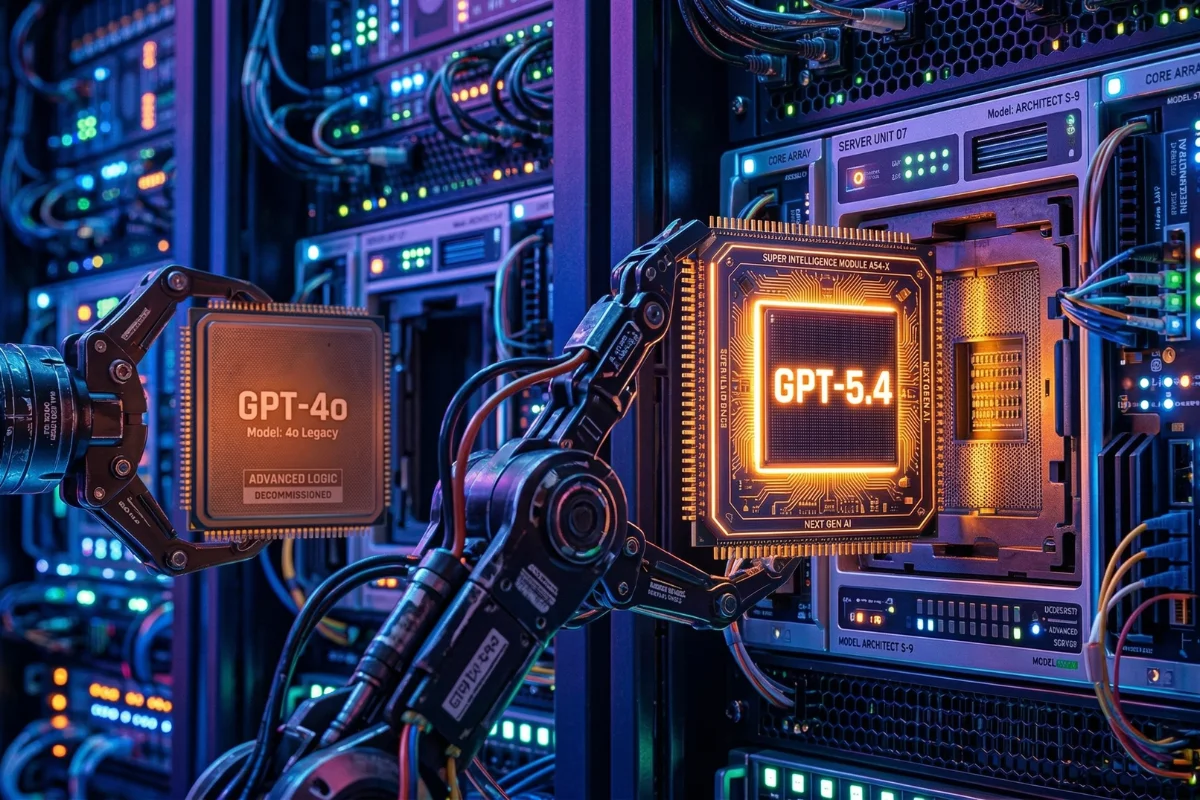
OpenAI just dropped a massive update, and tech leaders are scrambling to determine if the highly anticipated GPT-5.4 features justify an immediate migration. [The hype is undeniably real, but engineering teams need hard numbers, not just marketing pitches.]
Released in March 2026, this new frontier model drastically alters the artificial intelligence landscape. It introduces groundbreaking native computer control and claims a staggering 80% reduction in factual errors. Developers can finally build truly autonomous agents instead of just conversational chatbots.
We will break down exactly how this powerhouse compares to the legacy GPT-4o. You will discover the real API costs, analyze token efficiency metrics, and decide if your product ecosystem should make the leap today.
Slash API Costs: The Real Price Tag of Upgrading
The raw API pricing looks slightly different on paper, requiring teams to rethink their budget allocation. OpenAI charges $2.50 per 1 million input tokens for both models, keeping the baseline barrier to entry identical. However, the output token pricing requires careful attention from financial officers.
GPT-5.4 output tokens currently cost $15.00 per million, which represents a noticeable increase compared to GPT-4o’s $10.00 rate. This price bump reflects the massive computational power required to execute advanced reasoning and agentic tasks.
Optimize Your Token Spend
You can easily offset these higher output costs through intelligent system architecture. The newest API introduces dynamic tool search capabilities for developers. This innovative function reduces prompt token usage by an impressive 47%.
You no longer need to inject massive, repetitive tool definitions into every single API call.
✅ Smart Caching: Utilize the $0.25 cached input pricing to process repetitive tasks efficiently.
✅ Efficiency Focus: Rely on the model’s intelligence to require fewer prompt iterations to reach the correct answer.
❌ Resource Waste: Avoid using the top-tier “GPT-5.4 Pro” ($30/1M input) for basic classification tasks.
Calculate Your Real-World ROI
Consider a mid-sized enterprise generating 5 million output tokens monthly for an internal coding assistant. Sticking with GPT-4o costs exactly $50.00 for those outputs. Moving to the new infrastructure increases that specific line item to $75.00.
[Do not let a $25 difference deter you.] The new model reduces human review time and eliminates the need for expensive third-party error-checking tools. The overall return on investment heavily favors the upgrade for professional development teams.
Analyzing the Top GPT-5.4 Features for Power Users
The newest model entirely discards the concept of being just a simple text generator. It operates directly as an autonomous digital worker. You can now build complex workflows that interact seamlessly with desktop environments and enterprise web applications.
These upgrades transform how engineering teams approach software automation and testing.
Deploy Native Computer Control
You no longer need to maintain complex third-party wrappers to navigate graphical user interfaces. One of the most disruptive GPT-5.4 features is native computer control via Playwright integration. The model executes mouse movements and keyboard commands autonomously.
It recently scored 75.0% on the rigorous OSWorld-Verified benchmark. This officially beats the average human success rate of 72.4%. Developers can build complex workflows to test web applications, scrape dynamic data, and operate legacy software without APIs.
Leverage the Massive Context Window
Say goodbye to aggressive chunking algorithms and vector database limitations. The experimental 1 million token context window allows you to feed an entire enterprise codebase directly into a single prompt.
You can execute long-term task planning effortlessly. Teams can perform deep visual debugging on massive web applications instantly. Financial analysts can process decades of SEC filings in one seamless workflow without losing contextual thread integrity.
Advanced Reasoning: The “Thinking” Paradigm
OpenAI did not just release a single model; they launched an entire ecosystem designed for different computational needs. The release includes the standard model, a specialized “Thinking” variant, and a “Pro” tier.
You must match the specific model to your exact workflow requirements to maximize efficiency.
Implement Chain of Thought Workflows
The dedicated GPT-5.4 Thinking model actively engages in deeper, multi-step reasoning before outputting a final answer. It intentionally consumes more computational time to verify its own logic.
Deploy this specific variant for complex mathematical modeling or intricate architectural software design. It effectively prevents the AI from skipping crucial logical steps during execution.
Upgrade to the Pro Tier for Complex Tasks
When accuracy matters more than cost, switch your endpoints to GPT-5.4 Pro. This top-tier model achieves a staggering 89.3% score on the BrowseComp benchmark. It sets a new world-leading standard for finding hidden information across the web.
Reserve this powerhouse exclusively for senior-level knowledge work. Investment banking analysts and corporate legal teams will find the $30 per million input token price tag completely justified.
Quality Control: The End of Hallucinations?
Reliability remains the absolute biggest bottleneck for enterprise-wide AI adoption. Stakeholders refuse to trust systems that confidently invent fake data. OpenAI specifically engineered this latest update to tackle this exact pain point head-on.
The model aggressively fact-checks user prompts before generating any responses.
Build Trust with Enterprise Clients
The underlying architecture reduces the probability of incorrect responses by 33% when users feed it factually flawed prompts. This means the AI actively pushes back against bad human inputs instead of blindly agreeing.
Overall, the massive 80% drop in factual errors makes it the safest choice for critical knowledge work. In the GDPval benchmark, which evaluates professional accuracy across 44 occupations, it scored 83.0%. You can confidently deploy it for legal, financial, and medical use cases where accuracy is strictly non-negotiable.
📊 The Ultimate Showdown: GPT-5.4 vs GPT-4o
[Here is the exact comparative data you need to pitch this architectural upgrade to your non-technical stakeholders.]
| Feature / Metric | GPT-4o (Legacy) 📉 | GPT-5.4 (New) 🚀 |
|---|---|---|
| Input Cost (1M Tokens) | 💰 $2.50 | 💰 $2.50 |
| Output Cost (1M Tokens) | 💰 $10.00 | 💰 $15.00 |
| Context Window | 📊 128K Tokens | 📊 1M Tokens (Experimental) |
| Factual Accuracy | ❌ Baseline Errors | ✅ 80% Error Reduction |
| Agentic Capabilities | ❌ Text/Vision Only | ✅ Native OS/Computer Control |
| Tool Search Efficiency | ❌ Static Definitions | ✅ 47% Token Reduction |
Migration Strategy: How to Transition Smoothly
Do not blindly flip the switch on your production environment. A successful migration requires a calculated, phased approach to avoid unexpected billing spikes or broken workflows.
You must audit your current infrastructure before changing any API endpoints.
Audit Your Current API Usage
Identify exactly which microservices consume the most output tokens. If you operate a high-volume, low-complexity customer service chatbot, the new $15.00 output cost might ruin your profit margins. Keep those specific services on GPT-4o temporarily.
Isolate your complex reasoning tasks, code generation features, and autonomous agent workflows. These are the prime candidates for immediate migration.
Update Your Endpoints and Prompts
Transitioning is incredibly straightforward for developers. Change your API calls to target the gpt-5.4 endpoint.
You should also rewrite your system prompts. The new model understands intent much better than its predecessor. Remove the overly defensive, redundant instructions you previously used to prevent hallucinations. Let the native GPT-5.4 features handle the logical heavy lifting.
The Verdict: Should You Migrate Today?
Upgrade to the new ecosystem immediately if you build autonomous digital agents, manage complex coding environments, or require flawless data accuracy. The massive leap in reasoning capabilities and native desktop control provides an unfair competitive advantage.
Stick with the legacy GPT-4o infrastructure only if you run simple, high-volume conversational interfaces where raw output token costs dictate your survival.
Evaluate your current API spend this morning. Test the native computer control features in a staging environment this afternoon. Launch your very first pilot project by the end of the week to stay ahead of the curve.
- Anthropic Hits $350B Valuation: The Anthropic Claude vs ChatGPT Enterprise 2026 Migration

- Claude Code leak Anthropic: Crisis Exposed & Impact on US Devs

- Fix iPhone DarkSword iOS 18: Stop the Silent Hack Now

- OpenAI Sora Shut Down: Why The Top AI Video App Is Dead

- 10 US Platforms Exploding Now: The AI SaaS Tools 2026 List