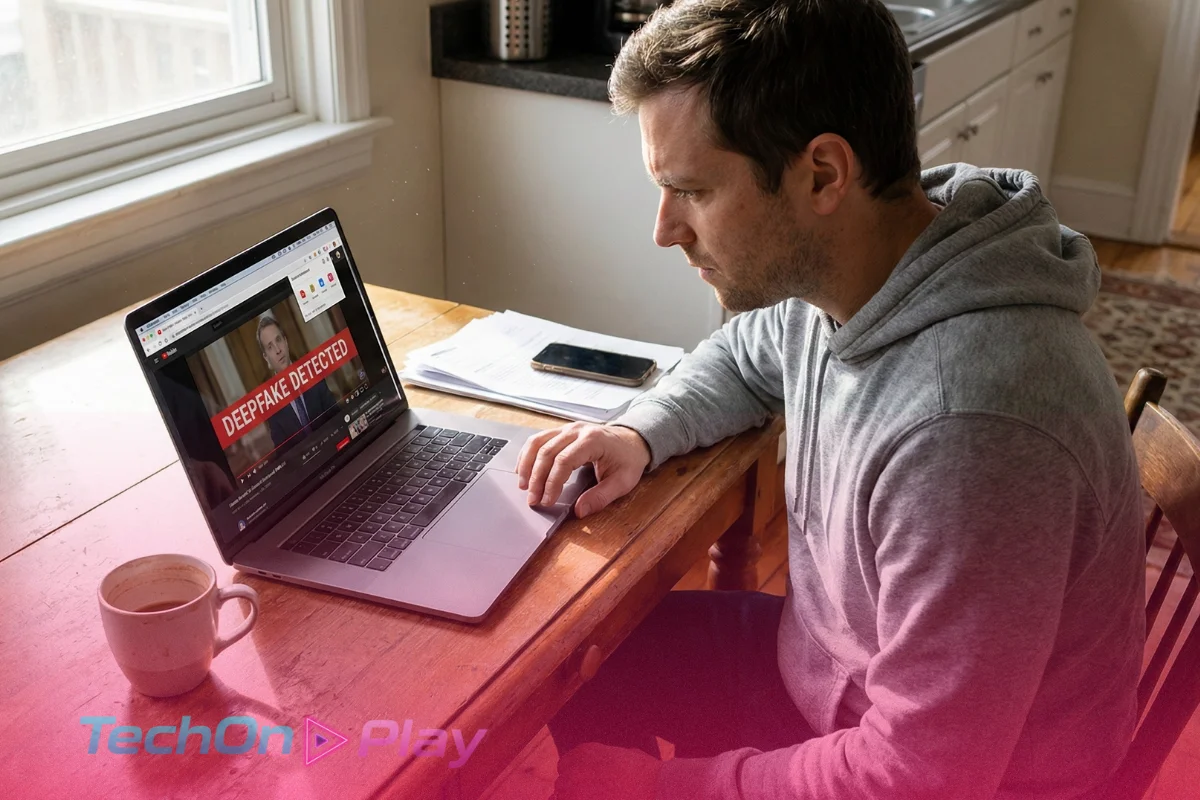
You just watched a video of a world leader making an announcement. Your heart raced. You started to share it. Then that sinking feeling hit: Is this even real?
Welcome to 2026. Deepfakes aren’t science fiction anymore—they’re a daily threat. With generative AI tools now accessible to anyone, learning how to detect deepfakes has become a critical survival skill. The good news? The technology, while advanced, still leaves fingerprints. And there are tools that can expose them.
Below is your complete guide to spotting deepfakes before you share them—plus the best software tools that do the heavy lifting for you.
Why Deepfake Detection Matters Right Now
The numbers are terrifying.
In 2024, deepfake videos increased by 550%. In 2025, that trend accelerated. By 2026, deepfakes have become a weapon for misinformation, fraud, and manipulation.
The risk to you:
- ❌ Sharing fake news without knowing it (damages your credibility)
- ❌ Falling for scams (crypto endorsements, job interview fraud)
- ❌ Becoming a victim (deepfake videos of YOUR face being created)
The opportunity:
- ✅ Spot fakes before they go viral
- ✅ Protect yourself and your family
- ✅ Be the person who stops misinformation
Learning how to detect deepfakes puts you ahead of 95% of internet users who just share without thinking.
The Visual Red Flags: What to Look For
Before you use tools, train your eye. Real deepfakes have tells.
1. The Eyes Tell the Story
Humans blink naturally. We blink 15-20 times per minute. We look around. Our pupils dilate and contract with lighting.
Deepfakes stare with unnatural intensity.
What to look for:
- ✅ Normal eyes: Blink at regular intervals, pupils react to light changes, natural eye movement
- ❌ Fake eyes: Locked stare, no blinking for 10+ seconds, frozen pupils, dead expression
The test: Watch for 30 seconds. Count the blinks. If it’s fewer than 5 blinks in 30 seconds, you’re probably watching AI.
2. Lip-Sync Lag (The Audio Mismatch)
Audio is the hardest part for AI to fake. Voice cloning is scary good, but syncing it to mouth movements often fails.
What to look for:
- ❌ Mouth moves but jaw doesn’t articulate
- ❌ “Mumbling” effect (lips move, but sound doesn’t match)
- ❌ Plosive sounds (P, B, M) look unnatural
- ❌ Slight delay between audio and lip movement
The test: Mute the video and watch the mouth. Then unmute and compare. Do they match perfectly? Or is there a millisecond delay?
3. Skin Texture & Lighting Inconsistencies
Real skin has imperfections—pores, wrinkles, blemishes, sweat. AI airbrushes everything perfect.
What to look for:
- ❌ Plastic wrap effect: Forehead unnaturally smooth while neck shows wrinkles
- ❌ Inconsistent shadows: Face has bright lighting, but shadows don’t match the background
- ❌ Unnatural skin tone: Face looks airbrushed compared to hands/neck
- ❌ Hair physics failures: Hair doesn’t move naturally with head movement
The test: Compare the skin on the face to the neck and hands. Is it suspiciously smoother? Do the shadows make sense for the lighting in the room?
4. Facial Distortions at Edges
This is where deepfakes really struggle. The edges of the face—jawline, ears, hairline—often glitch.
What to look for:
- ❌ Slightly warped jaw or chin edges
- ❌ Ears that look “off” or asymmetrical
- ❌ Hair that phases in and out at the edges
- ❌ Blurry or misaligned edges where face meets background
The test: Zoom in on the edges. Do they look slightly warped or blurry? Real video edges are sharp.
The Context Checks (Before You Even Need Tools)
Sometimes your brain is the best detection tool.
Check the Source
If a world leader made a shocking declaration, it would be on CNN, BBC, and Fox News within minutes—not just floating on X or TikTok.
Red flags:
- ❌ Video only exists on social media, not on major news sites
- ❌ No official statement from the person’s official account
- ❌ No corroboration from other news sources
Reverse Image Search
Take the most dramatic frame from the video. Run it through Google Lens or TinEye.
Often, you’ll find the original video where the person was saying something completely different. The deepfake just swapped the face onto existing footage.
The Emotion Test
If the video makes you angry or terrified in the first 5 seconds, pause.
That’s intentional. Viral deepfakes are engineered to bypass your logic and trigger emotion. They want you to share before you think.
Ask yourself:
- Does this match what I know about this person’s values?
- Am I reacting emotionally instead of rationally?
- Would this person say this?
The Best Deepfake Detection Tools (2026)
Now for the heavy lifting. Here are the tools that actually work:
1. Microsoft Video Authenticator
What it does: Uses AI to detect manipulated videos and identify deepfakes.
How to use:
- Upload the video file
- Wait 1-2 minutes for analysis
- Get a detailed report showing confidence scores
Accuracy: 95%+ for obvious deepfakes
Cost: Free
Best for: Serious verification (journalists, fact-checkers)
Pros:
- ✅ Highly accurate
- ✅ Detailed reporting
- ✅ Used by major news outlets
Cons:
- ❌ Slower (1-2 minutes per video)
- ❌ Requires uploading files (privacy concerns)
2. Sensity (formerly Deeptrace)
What it does: Real-time deepfake detection. Scans videos for AI manipulations.
How to use:
- Browser extension (detects videos on social media in real-time)
- Upload videos directly to their platform
- Get instant analysis with confidence scores
Accuracy: 98%+ (industry leader)
Cost: Free tier available, premium plans for teams
Best for: Regular users who want instant checking
Pros:
- ✅ Real-time detection (instant)
- ✅ Browser integration (checks videos as you browse)
- ✅ Highest accuracy rates
- ✅ Tracks deepfakes across the internet
Cons:
- ❌ Free tier has limitations
- ❌ Premium plans get expensive for teams
3. Intel OpenVINO Toolkit
What it does: Open-source tool designed specifically for detecting face manipulation.
How to use:
- Download the software
- Run it locally on your computer
- Upload videos for analysis
Accuracy: 90-95%
Cost: Free (open-source)
Best for: Tech-savvy users who want privacy
Pros:
- ✅ Completely free
- ✅ Runs locally (no data uploaded)
- ✅ No privacy concerns
- ✅ Regular updates
Cons:
- ❌ Requires technical knowledge
- ❌ Slower than cloud-based tools
- ❌ Steeper learning curve
4. Amber Video Authenticator
What it does: Uses cryptographic verification to prove whether a video is authentic.
How to use:
- Videos embed authentication data at capture
- Upload to verify authenticity
- Get certificate of authenticity
Accuracy: Proves authenticity, not just detection
Cost: Free verification, premium for creators
Best for: Content creators who want to prove their videos are real
Pros:
- ✅ Proves authenticity (not just detection)
- ✅ Can embed proof in original videos
- ✅ Blockchain-based verification
Cons:
- ❌ Requires creators to use it (not retroactive)
- ❌ Useless for existing videos
5. Adobe Firefly Content Credentials
What it does: Embeds metadata into AI-generated content to track origin.
How to use:
- Check metadata of suspicious images/videos
- See if it was AI-generated and by what tool
- Transparency into creative process
Accuracy: 100% if creator used Adobe tools
Cost: Free (checking), included in Adobe Suite
Best for: Identifying AI-generated content
Pros:
- ✅ Identifies AI-generated content
- ✅ Shows the tools used
- ✅ Blockchain verified
Cons:
- ❌ Only works if creator used Adobe tools
- ❌ Doesn’t help with existing deepfakes
Quick Comparison: Which Tool Should You Use?
| Tool | Best For | Accuracy | Speed | Cost |
|---|---|---|---|---|
| Microsoft Video Authenticator | Serious verification | 95% | Slow (1-2 min) | Free |
| Sensity | Quick checking | 98% | Fast (instant) | Free + paid |
| Intel OpenVINO | Privacy-first users | 90% | Slow | Free |
| Amber Video Authenticator | Proving authenticity | 100% | Instant | Free |
| Adobe Firefly | Tracking AI origin | 100% | Instant | Free |
Recommendation: Start with Sensity (most accurate, instant). If privacy is a concern, use Intel OpenVINO (runs locally).
Your Deepfake Detection Checklist
Before you share that video, use this checklist:
Visual Red Flags:
- ❌ Eyes stare unnaturally?
- ❌ Lip-sync lag?
- ❌ Skin looks airbrushed?
- ❌ Edges warped or blurry?
Context Red Flags:
- ❌ Only on social media, not major news?
- ❌ No corroboration from other sources?
- ❌ Makes you extremely angry/scared?
Tool Verification:
- ✅ Run through Sensity (quick)
- ✅ Cross-check with Microsoft Video Authenticator (thorough)
- ✅ Check source metadata
If any flags appear: Don’t share. Investigate further.
The Bottom Line: How to Detect Deepfakes in 2026
The era of “seeing is believing” is dead.
We’re now in the era of “verify, then trust.”
You have two advantages:
- Your eyes: Train yourself to spot visual anomalies
- Free tools: Sensity, Microsoft, and others make verification instant
The next time a “shocking” video lands in your chat, don’t just share it. Scrutinize it.
Look for the dead eyes. Check the shadows. Run it through a tool. Be the firewall against misinformation.
And if you find a deepfake? Report it. Alert others. You might stop false information from going viral.
That’s how to detect deepfakes. That’s how you protect yourself in 2026
Further Reading
- Anthropic Hits $350B Valuation: The Anthropic Claude vs ChatGPT Enterprise 2026 Migration

- Claude Code leak Anthropic: Crisis Exposed & Impact on US Devs
- Fix iPhone DarkSword iOS 18: Stop the Silent Hack Now

- OpenAI Sora Shut Down: Why The Top AI Video App Is Dead

- 10 US Platforms Exploding Now: The AI SaaS Tools 2026 List