Trends
The 3D Figurine AI Trend on ChatGPT: The Exact Prompt That Works
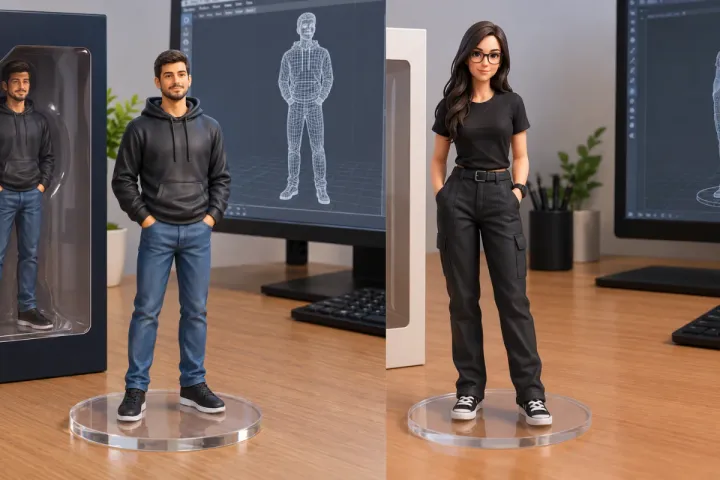
The 3D figurine AI trend on ChatGPT is catching up fast to what Gemini started with Nano Banana. Every feed right now has someone shrunk down into a collectible toy version of themselves, standing on a tiny acrylic base.
Most tutorials floating around only cover Gemini, since Google’s Nano Banana model kicked off the craze first. ChatGPT can produce the same collectible-figurine look, but it needs a different prompt structure to avoid getting flagged when a real face is attached.
This guide breaks down the exact prompt built for ChatGPT’s image model, why it needs to be worded differently than the Gemini version everyone is copying, and the small tweaks that push the result from plastic-looking to genuinely collectible.
The Exact Prompt for ChatGPT
Attach a clear, full-body or waist-up photo of yourself, then paste this:
Turn this photo into a 1/7 scale collectible figurine. Subject: keep the person’s face, likeness, and proportions from the attached photo, rendered in a smooth toy-like material with visible sculpted detail. Base and packaging: the figurine stands on a round clear acrylic base with no text engraved on it, placed next to a matching display box with clean minimal typography and a plastic window. Setting: a wooden desk with a computer monitor in the background showing a 3D modeling wireframe of the same figure. Lighting: soft studio lighting, subtle shadows under the base, slight reflective sheen on the material. Avoid: real skin texture, human hair strands, blurry edges, distorted hands, visible brand names or logos on the packaging.
Copy Prompt
✅ Naming the desk, the box, and the wireframe screen first gives ChatGPT a full scene to render, which shifts focus away from the uploaded face ✅ “Keep the person’s face, likeness, and proportions” works better than describing facial features again, since ChatGPT already reads them from the photo ❌ Never write “realistic human” anywhere in the prompt. ChatGPT treats that phrase as a flag for identity manipulation and blocks more often
Why ChatGPT Handles This Differently Than Gemini
Gemini’s Nano Banana model was built for this kind of image-to-image editing from the start, so it accepts a real face plus a full styling prompt in one shot without much friction.
ChatGPT’s image model applies a stricter layer of review when a prompt combines an uploaded face with heavy physical transformation instructions. The figurine trend counts as heavy transformation, since the whole point is turning a person into plastic.
The fix works the same way it did for the 90s AI photo trend: describe the environment in detail and let the face carry over as a simple reference, instead of rewriting the face itself. For the original figurine wave and the trend that led into it, the 90s AI photo trend on Gemini covers how Gemini handles real faces more loosely across the board.
Tips to Make the Figurine Look Realistic
- Ask for “visible seam lines at the joints,” a small detail that separates a convincing figurine from a smooth plastic blob
- Add “matte finish on the clothing, glossy finish on the base,” since real collectibles mix textures instead of using one uniform sheen
- Skip asking for “perfect symmetry.” Real manufactured figurines have tiny asymmetries that make the render look less like a 3D icon
Run the prompt two or three times if the face comes out warped or the hands look off. ChatGPT struggles more with hand detail on figurines than Gemini does, and a second attempt usually fixes it without changing the wording.
ChatGPT vs. Gemini for the 3D Figurine AI Trend
| Feature | 🤖 ChatGPT | 🎨 Gemini (Nano Banana) |
|---|---|---|
| 👤 Real face handling | ⚠️ Stricter, needs scene-first wording | ✅ Built for this exact use case |
| ⏱️ Average attempts needed | 2 to 3 | 1 |
| ✋ Hand and finger accuracy | ⚠️ Weaker | ✅ Strong |
| 💰 Free tier available | ✅ Yes | ✅ Yes |
| 🚫 Refusal rate on first try | Higher | Lower |
| 🖼️ Best use case | Simple bust or waist-up figurines | Full-body, pose-heavy figurines |
FAQ
Does ChatGPT refuse the figurine prompt often?
More often than Gemini, especially with full-body photos. Leading with the desk, base, and packaging details instead of describing the person lowers the refusal rate noticeably.
Why do the hands look distorted in my result?
Hand and finger detail is a known weak spot for ChatGPT’s image model, more so on stylized renders like figurines. Running the same prompt again usually produces a cleaner result.
Can I skip the packaging box and just get the figure?
Yes. Remove the box sentence from the prompt and keep the acrylic base and desk setting. The box adds authenticity, but it is not required for the figurine itself to render correctly.
Which tool gives a more convincing figurine overall?
Gemini currently produces sharper, more accurate results on the first try, since Nano Banana was built specifically for this kind of transformation. ChatGPT catches up when the prompt centers on the scene instead of the face.
Try It Before the Trend Fades
Pick a clear, well-lit photo, paste the prompt above into ChatGPT, and lean on the desk-and-packaging details to carry the collectible look. If the hands or face come out warped, run it again before changing any wording.